Indigo is the magic of blue
Indigo encompasses a deep, rich shade of blue, derived from the plant that bears its name. The invention of affordable and colourfast synthetic indigo dye in the late 1800s revolutionised the textile industry, forever linking blue with denim and workwear.
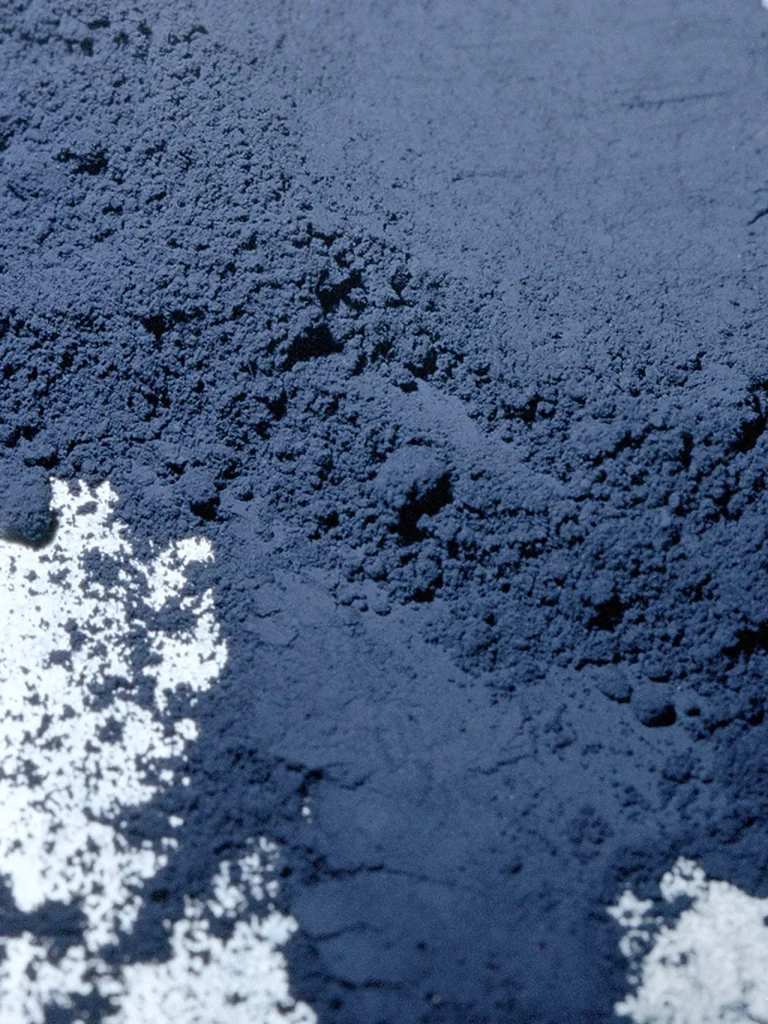
Indigo was the last of all major dyes to be produced synthetically, a few years before 1900. The new chemical invention more or less eliminated the use of natural indigo from commercial dyeing. These new blues were pure and precise, without the slight impurities and variations of their natural counterpart. Being both cheaper and easier to use than black, they became the standard colour for work uniforms.
Even though indigo is the base for all blue dyes and blue clothing, it is especially associated with denim, which became the workwear of American miners and farmers from the late 1800s onwards. The characteristic three-dimensional quality in a pair of heavily worn jeans is directly related to the properties of the indigo dye. Since the pigments do not penetrate the cotton fibres but bond only on top of them, the different layers of blue are worn down gradually, top-down, when the fabric is frayed.
The rich history and cultural significance of indigo have inspired artists, writers, and designers across various disciplines, making it a symbol of heritage and innovation, and used to convey emotions and themes ranging from melancholy to mysticism. Moreover, indigo has played a significant role in cultural rituals and traditions. In many cultures, indigo-dyed fabrics are used in ceremonies and traditional attire, symbolising status, spirituality, and identity. The intricate techniques of indigo dyeing, passed down through generations, highlight the craftsmanship and cultural heritage associated with this unique colour.